Pages


Tampilkan postingan dengan label Healthy. Tampilkan semua postingan

Minggu, 15 Januari 2012

Healthy Lunch

When you go to school, you want to be at the top of your game so you can stay alert and perform well. Eating a healthy lunch and snacks will help fuel your brain and body. But putting together healthy lunches and snacks can be surprisingly difficult and time consuming. It’s certainly much easier to bring pre-packaged snacks and lunches to school. These options, however, are often filled with saturated fats, sodium, and sugar—all things that you should avoid.

Below are some suggestions for lunches or snacks that are delicious, healthy, and easy to make. Round off any of these with fruit (apples, oranges, bananas) or veggies and beans (carrots, celery, edamame) on the side.

Sandwiches

Use whole wheat, whole grain, or flax breads. Options for easy and yummy sandwiches are:

  • Peanut butter and jelly, topped with sliced banana
  • Low-fat deli meat, lettuce, tomato slice, and mustard or hummus
  • Cheese, avocado, sprouts
  • Smoked salmon, low-fat cream cheese, tomato, red-onion

Kabobs

Use wooden skewers to create healthy kabobs. Alternate sliced apples, bell peppers, grapes, baby tomatoes, cantaloupe, watermelon, broccoli, baby carrots, and anything else you can think of. For dipping, use yogurt, hummus, sour cream, or tzatziki, a Greek sauce made with yogurt and spices.

Pitas or roll-ups

Whole-wheat pita or roll ups are great because you can stuff them with anything: low-fat deli meats, steamed kale, sliced cheese, tomato and cucumber slices, sprouts. Stuff these beforehand, or simply pack the ingredients and put it together when you are ready to eat.

Thermos food

  • Hot Food: soups and stews (this is an especially useful way to deal with leftovers)
  • Cold Foods: blend up a cold fruit and veggie smoothie before you leave for the day

Rabu, 14 Desember 2011

6 Healthiest Food

Do you think hard to find healthy food. Sometimes, maybe you think the healthy food already not healthy because some reason. So, this is a list of 6 healthiest food in the world.

1. Olive Oil


Olive Oil contains monounsaturated (good) fats, which have been shown to have some excellent health benefits, such as possibly lowering your risk of diseases such as heart disease and cancer. The popular Mediterranean Diet craze is well founded because people from these countries, who tend to get more of their fat from monounsaturated sources like olive oil and less from saturated and trans fat have lower incidences of heart disease, atherosclerosis, colon cancer, and asthma. Be sure to buy Extra Virgin Olive Oil, which is the least processed and contains more polyphenols (antioxidants).

2. Broccoli

Broccoli makes the 10 healthiest foods list because it's high in antioxidants and loaded with vitamin C, calcium and folic acid. Broccoli is a proven cancer fighting food – eating broccoli stimulates the body to create natural cancer fighting substances and diets including broccoli have been shown to prevent a number of different types of cancers. Broccoli is also high in soluble fiber and low in calories. Among the other many healthy benefits of broccoli are its’ ability to help prevent osteoporosis and treat high blood pressure.

3. Spinach

Spinach prevents muscle & bone loss and has been linked to decreased risk of cancer and heart diseases. It’s also very high in antioxidants and vitamins A, C, and K, as well as potassium and folate. Spinach is one the healthiest foods you can eat – calorie for calorie, not many foods can match the nutritional benefits and low calorie content of spinach and other green, leafy vegetables like kale and Swiss chard.

4. Apples

Apples aid in lowering cholesterol; prevent numerous types of cancer; and have health benefits related to many other conditions, including Alzheimer’s disease, asthma, and diabetes. Apples are extremely high in antioxidants and contain high amounts of vitamin C and fiber. However, apples tend to be one of the most contaminated fruits with pesticides, so choose organic varieties when possible.

5. Sweet potatoes

Sweet potatoes are one the top 6 healthiest foods for good reason: they're a nutrient-rich vegetable that contain high amounts of fiber, potassium, and vitamins A and C. Sweet potatoes also have antioxidant and anti-inflammatory properties, and have been shown to stabilize blood sugar levels (making you feel fuller for longer periods of time) and have cancer and heart disease fighting properties.

6. Salmon

Salmon is loaded with heart healthy omega-3 fatty acids, which have been linked to a decreased risk of sudden-death heart attacks, heart disease, memory loss, and Alzheimer's. Salmon has also been shown to help control symptoms of arthritis and depression as well. Be sure to choose wild salmon over farm raised.

Minggu, 16 Oktober 2011

Fat and Calories


What's the difference between fat and calories?

Fat is one of six nutrients your body needs to stay healthy. The other five nutrients are:

  • Carbohydrates (found in fruits, vegetables, pasta, rice, grains, peas, beans, and other legumes)
  • Proteins (found in meat, poultry, dairy products, eggs, and beans)
  • Minerals (such as potassium, calcium, and iron)
  • Vitamins (such as vitamins A, D, E, and K)
  • Water

Of these six nutrients, carbohydrates, protein and fats provide calories. Each gram of carbohydrate and protein yield 4 calories/gram. Each gram of fat yields 9 calories.

A calorie is a measurement, just like a teaspoon or an inch. Calories are the amount of energy released when your body breaks down (digests and absorbs) food. The more calories a food has, the more energy it can provide to your body. When you eat more calories than you need, your body stores the extra calories as body fat. Even a fat-free food can have a lot of calories that eventually will contribute and can be stored as excess body fat.

Why does fat get all of the attention?

Fat gets all of the attention for many good reasons. Consider these facts:

  • Some fats can raise cholesterol levels in the blood. A high cholesterol level is a leading risk factor for heart disease.
  • Some fatty foods (such as bacon, sausage, and potato chips) often have higher calories with fewer vitamins and minerals than low-fat other foods. (Note: Protein sources, especially red meat and dairy products, often contain fat. Good, low-fat sources of protein include lean meat, fish, poultry without skin, beans, lentils, tofu, low-fat yogurt, low-fat milk, and low-fat cottage cheese, and tuna fish packed in water.)
  • Fat has about twice as many calories per gram as carbohydrates and proteins. A gram of fat has about 9 calories, while a gram of carbohydrate or protein has about 4 calories. In other words, you could eat twice as much carbohydrates or proteins as fat for the same amount of calories.

Will I lose weight if I eat low-fat foods?

It's true that a diet high in fat can lead to weight gain. But it takes more than just eating low-fat foods to lose weight. You must also watch how many calories you eat. Remember, extra calories even from fat-free and low-fat foods get stored in the body as body fat. Many times people replace high-fat foods for high-calorie foods, like sweets, and gain weight rather than lose weight.

To lose weight, you need to burn more calories than you eat. You can achieve this goal by eating less fat and fewer calories, and exercising. Exercise burns calories. (Consult with your health care provider before starting an exercise or diet program.)

How much fat should I eat?

A low-fat style of eating is important for maintaining a healthy weight and preventing heart disease. The American Heart Association recommends limiting total calories from fat to less than 30 percent. That's about 65 grams of fat or less a day if you eat 2,000 calories a day.

How can I know how much fat I am eating?

  • Read nutrition labels on food packages. Nutrition labels show the number of grams of fat per serving. Compare this number to your ‘budgeted’ amount of fat for the day. Food labels They also show the daily percentage of fat provided in each serving. In other words, if the daily percentage of fat per serving is 18%, each serving provides 18% of the total fat you should eat for the day. Choose a brand that has a lower fat percentage. (The daily percentage value is based on a number of calories listed on the nutrition label, usually 2,000. Your calorie needs may be higher or lower.)
  • Learn about the foods you eat. Fat and calorie listings for individual foods can be found in nutrition books at your local library and on food packages.
Source from my.clevelandclinic.org

Sabtu, 15 Oktober 2011

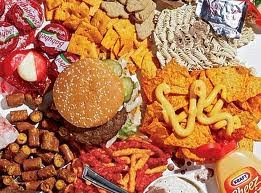
Smart Food, Junk Food


Food for health and well-being is not a new idea. The Egyptians, Greeks, and Romans believed that certain foods were natural cure-alls. Poppy juice was used to kill pain, strawberry roots to treat mad-dog bites. Crocodile blood was recommended for failing eyesight. Here are some foods that are currently thought to be good for you.


Smart Food


  • Banana =
    Contains potassium and helps to prevent ulcers


  • Barley =
    Lowers cholesterol because it is high in the good fat (HDLs, high-density lipoproteins)


  • Cheese = Fights cavities because it contains calcium


  • Chili peppers = Good for bronchitis, colds, and sinusitis


  • Cucumber = Breaks up cholesterol deposits


  • Figs = Helps to stabilize blood sugar, which keeps energy levels high


  • Fiber = It helps to rid your body of waste and also makes you feel full. Fiber is found in fruits and vegetables and whole-grain cereal. It is not digestible


  • Horseradish = It's sharp and strong, but fights colds because the root contains an antibiotic and vitamin C


You may want these junk foods, but try to stay away !


Junk Food


  • Cakes and cookies = Contain too much sugar and not enough vitamins and minerals


  • Colas = Have lots of sugar and few nutrients; may contain caffeine, an addictive drug


  • Ice cream = Has many nutrients but is full of sugar and fats

  • Potato chips = Although made from potatoes, they are deep fried and contain lots of salt and fat


  • Sugar-coated cereal = Half cereal and half sugar


Food Facts


Are french fries from France? Is chop suey Chinese? Here are some common but mistaken beliefs about food and eating.


French fries are not from France. They were first made in Belgium in 1876. The term “french” refers to the way of cutting the potatoes before cooking.


Chop suey was created in America by a Chinese cook who worked in a California mining camp in the 1800s. He stir-fried a variety of vegetables, called it tsa sui, Mandarin Chinese for “various things,” so people called it chop suey.


Almost everyone associates potatoes with Ireland. Although they are its main crop, the potato is a plant originally from Peru, and was brought to Europe by explorers


Cool off with ice cream? Wrong. Ice cream feels cool, but it is loaded with calories (units of heat) and actually makes your body warmer.


Source from factmonster.com

Visitors

free counters

About me

Foto saya
Depok, Jawa barat, Indonesia
Hi ! Visitor, My name's Naufal Bree. I live in Depok, Indonesia. This is my blog. HAVE FUN !!!